How to Start Losing Weight After Pregnancy (Safely, Without the "Bounce Back" Pressure)
If you're wondering how to start losing weight after pregnancy, you're not alone, and you're not behind. Postpartum bodies change, because pregnancy, birth, and early parenting change everything. Healing comes first. The real goal is steady fat loss you can maintain, not a fast "bounce back."
Most people should wait for medical clearance before intentional weight loss or harder exercise, often at the 6-week postpartum visit. That said, postpartum care isn't just one appointment. Many providers want an early check-in within a few weeks, then a full visit by 12 weeks.
Set expectations now: progress is usually slow, and many people reach a new normal over 6 to 12 months. If you're breastfeeding, weight loss can still happen, but the plan has to protect your energy and milk supply.
Start with safety first, when it's okay to try to lose weight after pregnancy
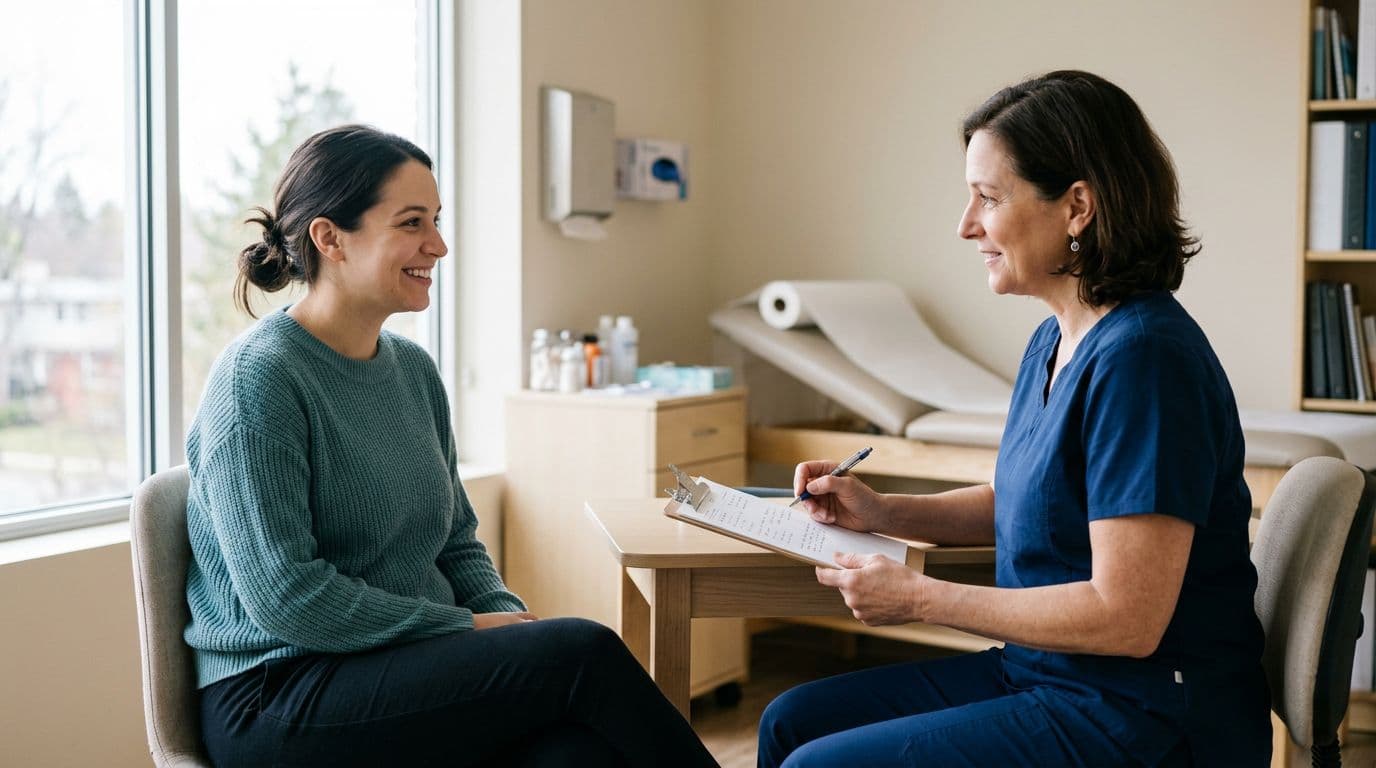
An early postpartum checkup conversation about recovery and safe activity, created with AI.
Postpartum weight loss goes better when your body feels stable. Think of recovery like resetting a foundation after a storm. If you build too fast, cracks show up as pain, leaking, or a setback that forces you to stop.
Early on, your body is also changing on its own. Some weight drops quickly from fluid shifts and baby-related changes. After that, fat loss is slower, and that's normal.
For an overview of postpartum recovery topics and what to discuss with your provider, see ACOG's guidance on after-pregnancy care.
When to begin (and why the first weeks are about recovery, not dieting)
For most people, the first 6 weeks are mainly for healing. Your pelvic floor, core, and tissues need time, even if you feel "fine." If you had a C-section, severe tearing, or complications, your timeline may be longer.
During this phase, strict calorie cutting and intense workouts can backfire. You're more likely to get injured, feel wiped out, or worsen bleeding. Instead, focus on basics: regular meals, hydration, short walks if approved, and sleep wherever you can get it.
If the scale changes day to day, don't panic. Postpartum weight moves like the tide, not a straight line.
What to ask at your postpartum checkup (especially if you had a C-section or diastasis recti)
Bring a short list so you don't forget while you're sleep-deprived:
- Exercise clearance: Walking, strength training, running, and lifting limits.
- Core check: Ask about diastasis recti and which moves to avoid.
- Pelvic floor symptoms: Leaking, heaviness, pressure, or pain.
- Incision and bleeding: Healing, swelling, discharge, and what's normal.
- Dizziness and fatigue: Especially if you feel faint or short of breath.
- Mood: Anxiety, sadness, rage, intrusive thoughts, or feeling numb.
Pelvic floor physical therapy can make exercise safer and more comfortable, especially if you have pain or leaking.
If something feels wrong, don't "push through." Postpartum recovery responds best to early support.
Stop exercising and call your doctor urgently if you have heavy bleeding, chest pain, severe headache, calf swelling, fever, or worsening pain.
Build a simple eating plan that supports fat loss, energy, and milk supply if you're breastfeeding
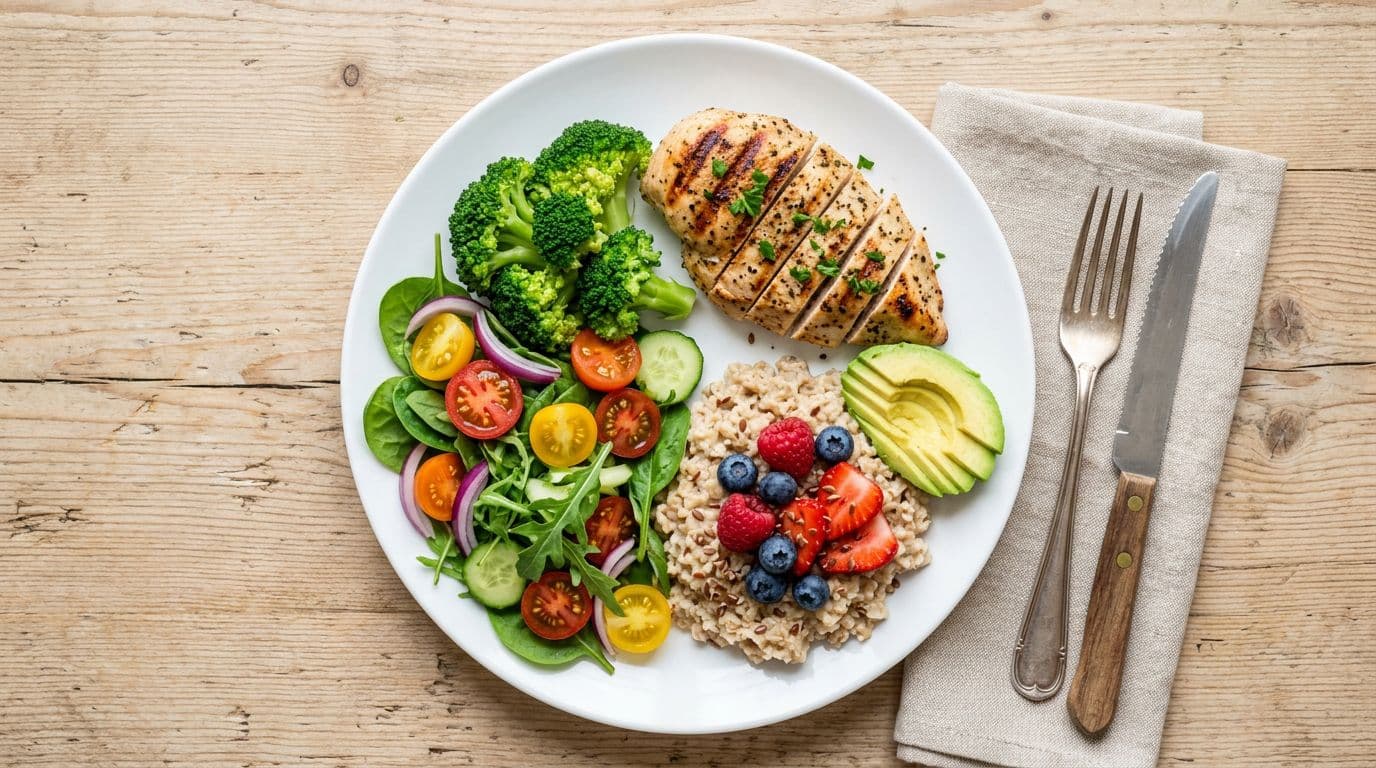
A balanced plate example that supports fullness and steady energy, created with AI.
Food is your daily "lever," because you do it every day anyway. The best postpartum eating plan isn't strict. It's repeatable on two hours of sleep, with one hand free.
If you like more detail on postpartum weight management recommendations, this clinical guideline summary on postpartum weight management provides helpful context.
Focus on steady loss, not a big calorie cut
A realistic pace for many is about 0.5 to 1.5 pounds per week after you're cleared. If you're breastfeeding, slower loss can be normal, especially early. Rapid loss (roughly over 2 pounds per week) can hurt recovery, worsen fatigue, and may affect milk supply for some parents.
Use feedback beyond the scale. Hunger, mood, workouts feeling harder, and dips in supply are signals to eat more consistently, not proof you "lack willpower."
Use the "protein plus fiber" plate to stay full
Aim for a simple structure at most meals:
- Half plate non-starchy veggies (salad greens, broccoli, peppers, frozen veggie mixes)
- Palm of protein (eggs, Greek yogurt, chicken, beans, tofu, canned tuna or salmon)
- Fist of high-fiber carbs (oats, brown rice, potatoes, berries, whole-grain toast)
- Thumb of healthy fat (avocado, nuts, olive oil)
Protein helps muscle repair, which matters when you're carrying a baby all day. Quick snack pairs also help: yogurt plus berries, apple plus peanut butter, or string cheese plus a handful of nuts.
Breastfeeding basics: enough calories, enough water, fewer "empty" drinks
Breastfeeding often increases calorie needs by about 330 to 500 extra calories per day, so keep any deficit small. Hydration matters, too. Many breastfeeding parents do well around 13 cups of fluids per day, but thirst is still your best guide. Try drinking with each feed.
Also watch liquid calories. Soda, sweet coffee drinks, juice, and alcohol add up fast and don't keep you full. Swap in water, seltzer, or unsweet tea, and keep caffeine moderate so sleep doesn't get even tougher.
Add gentle movement that actually fits life with a newborn
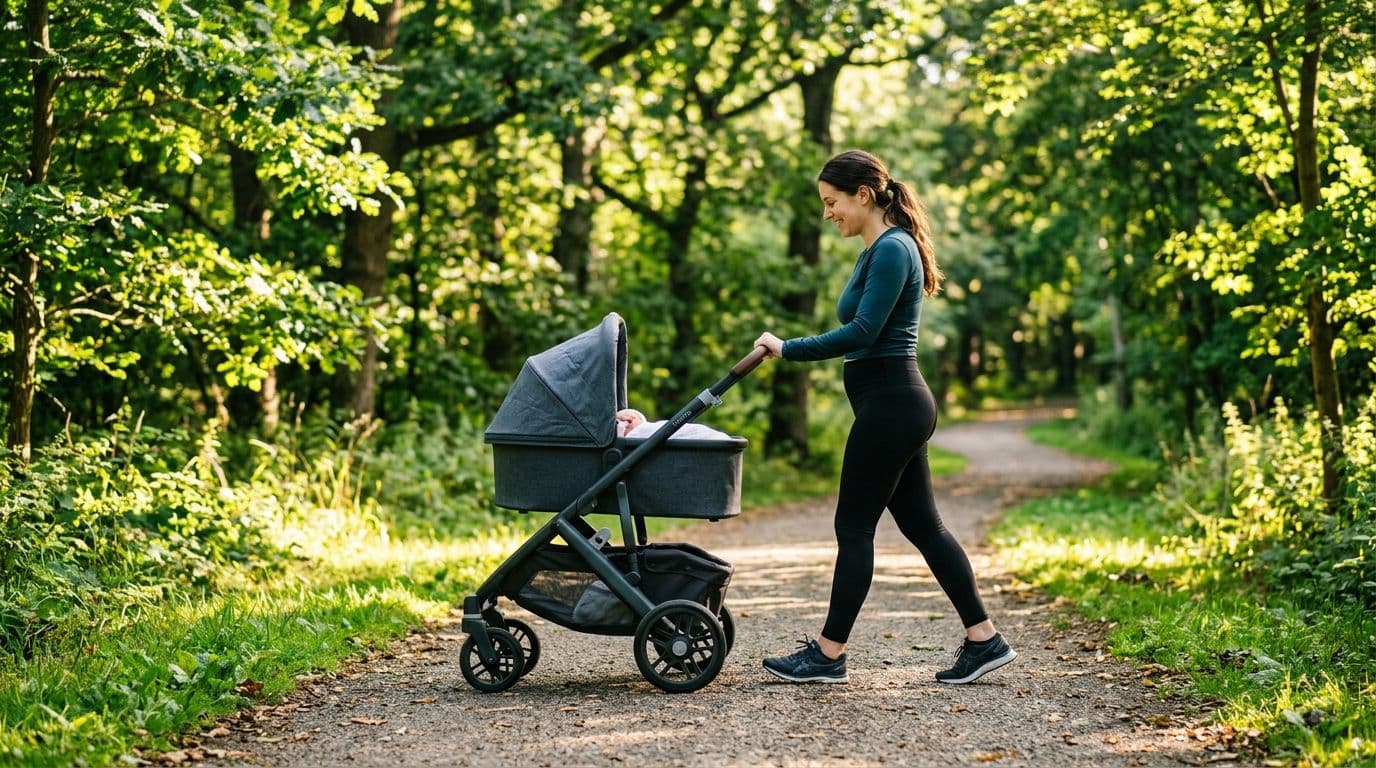 A simple stroller walk that supports recovery and routine, created with AI.
Movement shouldn't feel like another job. Start small, then build. After clearance, many people work up to the common public-health target of 150 minutes per week of moderate activity plus two strength days. You don't need to hit that right away.
The CDC's physical activity recommendations for postpartum women can help you understand what "moderate" means and why it supports health.
The easiest start: walking, breathing, and pelvic floor work
After you're cleared, try a week-one plan you can actually finish: 10 to 15 minutes of walking, 3 to 5 days per week. Add 3 to 5 minutes of diaphragmatic breathing, then gentle pelvic floor contractions.
Keep the effort easy. You should be able to talk while you walk. Stop and scale back if you feel heaviness, leaking, pain, or increased bleeding.
Progress to strength training, because muscle helps your metabolism
Strength work supports fat loss long term, because it protects muscle while you lose weight. It also helps posture, especially if you're feeding, rocking, and carrying for hours.
Twice per week, do 15 to 25 minutes:
- Chair squats
- Glute bridges
- Wall push-ups
- Band rows
- Dead bugs (only if your core is ready)
If you have diastasis recti, avoid moves that cause doming or coning down the midline. When in doubt, get guidance from a postpartum-trained PT or coach.
Make it doable with "minimum effective" goals, sleep, and stress support
Broken sleep raises hunger and cravings, so your plan has to respect reality. Ask for a protected 2-hour sleep block when possible. Keep one easy meal ready each day (think rotisserie chicken, microwavable rice, bagged salad). Regular meal times also reduce random grazing.
Track non-scale wins, too: energy, waist measurement, strength, and mood. If postpartum depression or anxiety shows up, support can help weight goals because it helps you function.
Conclusion
Starting to lose weight after pregnancy works best as a three-part plan: get cleared and heal, eat for steady loss (and milk supply if breastfeeding), then build movement you can repeat. The timeline is usually months, not weeks, and consistency beats intensity every time.
If you want a simple start this week, do four things: schedule your checkup or follow-up, add protein to breakfast, take a 10-minute walk, and do 5 minutes of breathing or pelvic floor work. If pain, leaking, heaviness, or mood symptoms show up, get help early. Support is part of the plan, not a sign you failed.
Comments
Post a Comment
Thanks for feedback!